

Polycarbonate Roof Problems? Check These 3 Things First
A polycarbonate roof is widely used for patios, greenhouses, carports, pergolas, skylights, and outdoor walkways because it offers excellent impact resistance, relatively low weight, and natural light transmission. However, even a properly manufactured polycarbonate roofing system may develop problems when installation conditions, weather exposure, or maintenance requirements are overlooked.
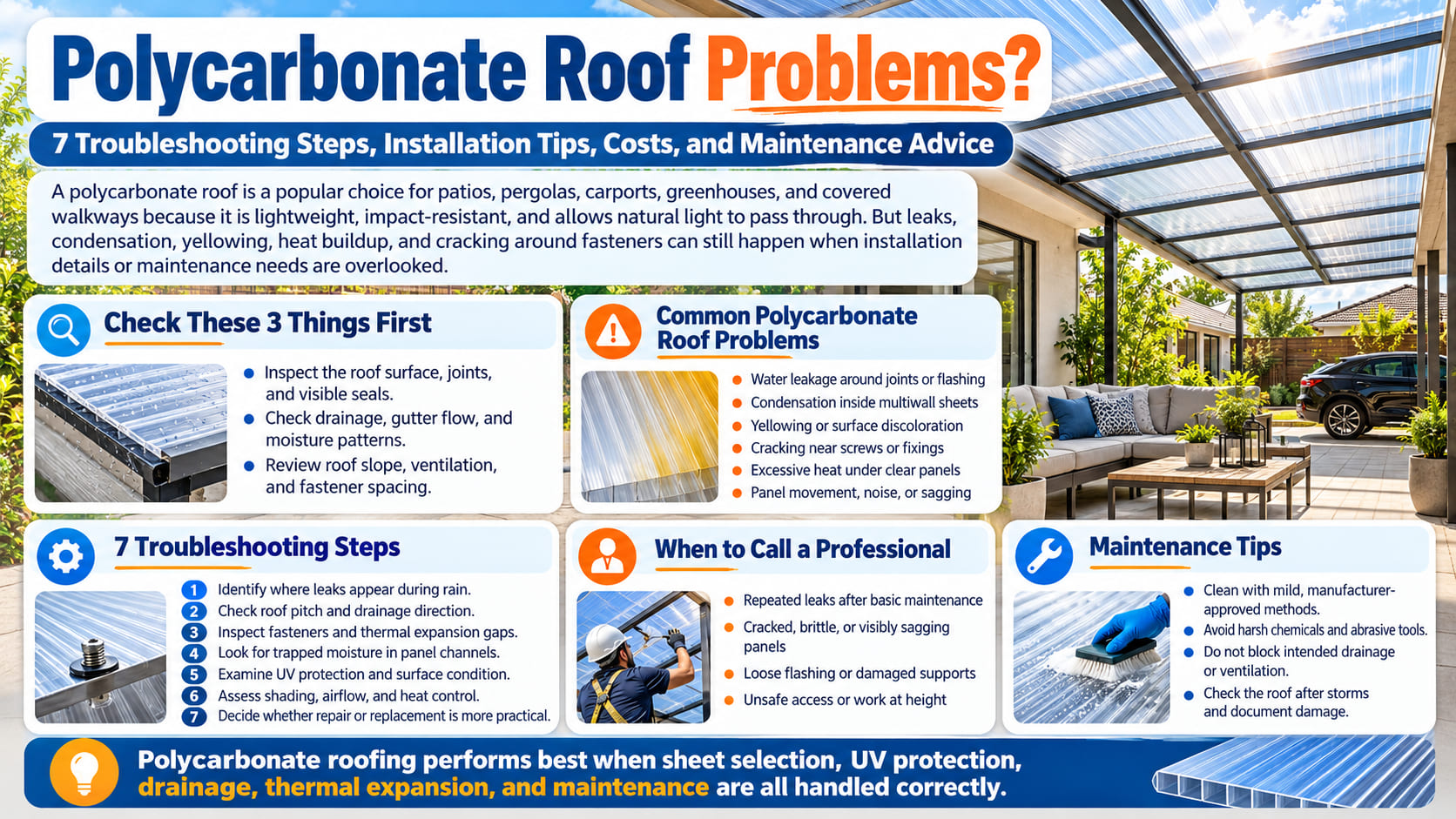
Common complaints include water leaking through roof joints, condensation inside multiwall sheets, excessive heat beneath transparent panels, surface discoloration, unusual expansion noises, and cracking around fasteners. These symptoms do not always mean the entire roof needs replacing. In many situations, the first step is identifying whether the problem comes from the sheets, installation details, drainage system, or supporting structure.
Start with these 3 essential checks:
- Inspect the roof surface and visible joints: Look for cracks, loose fasteners, damaged flashing, displaced sealing strips, accumulated debris, and obvious water entry points. Perform the initial inspection from a safe location.
- Check drainage and moisture patterns: Determine whether water is entering through a joint, collecting near the gutter, or forming as condensation beneath the panels.
- Review the installation conditions: Confirm the sheet orientation, roof slope, ventilation, support arrangement, and whether the fasteners allow for thermal expansion.
These preliminary checks can help distinguish minor maintenance issues from installation defects or structural problems. A roof that leaks only during heavy rain may have a different cause from one that constantly develops moisture between the internal channels. Likewise, a sheet that makes occasional clicking sounds during temperature changes is not necessarily experiencing the same problem as a panel that has visibly buckled or cracked.
Before attempting any repair, remember that polycarbonate roofing sheets are generally not intended to support a person's weight. Never step directly onto the panels. High-level inspections, structural repairs, and work near electrical installations should be handled by appropriately qualified professionals.
Common Polycarbonate Roof Problems: Causes, Symptoms, and Recommended Actions
Polycarbonate roofing problems can originate from several different parts of the roofing system. Although the sheets themselves are designed to resist impact and weather exposure, the performance of the completed roof also depends on correct profiles, flashing, fasteners, installation tolerances, and drainage.
The following table summarizes common symptoms and practical actions to consider before requesting repairs.
| Problem or Cause | How to Identify It | Recommended Action |
|---|---|---|
| Water leakage | Dripping water near joints, screws, edges, or wall connections | Inspect flashing, seals, profiles, and drainage paths |
| Condensation | Fogging, droplets, or moisture inside multiwall channels | Check end tapes, drainage openings, ventilation, and panel orientation |
| Yellowing or discoloration | Reduced clarity, uneven color, or visible surface deterioration | Check UV-protected orientation, product age, and warranty coverage |
| Cracking around screws | Small fractures, stress marks, or deformation near fasteners | Have a contractor inspect fixing pressure and thermal expansion allowances |
| Excessive heat | Uncomfortable temperatures below transparent roofing during strong sunlight | Consider solar-control sheets, ventilation, or compatible shading systems |
| Panel movement or noise | Popping sounds, visible buckling, or movement during temperature changes | Check expansion gaps, fixings, and manufacturer installation requirements |
| Sagging panels | Roof sheets appear curved downward or unstable between supports | Request assessment of sheet thickness, support spacing, and structural loads |
| Dirt or algae accumulation | Reduced light transmission, staining, or organic buildup | Use manufacturer-approved cleaning methods and inspect drainage |
The most important distinction is whether the problem involves ordinary surface maintenance, water management, or the mechanical integrity of the roofing system. Cleaning visible dirt is substantially different from repairing a cracked roof panel or correcting inadequate structural support.
How to Troubleshoot a Polycarbonate Roof: 7 Practical Steps
A systematic inspection helps avoid unnecessary replacement and makes it easier to explain the problem to a roofing contractor. These seven steps focus on identifying symptoms and determining the appropriate next action without attempting unsafe roof access or structural modifications.
Step 1: Identify the Exact Location of Water Leaks
If a polycarbonate roof leaks during rainfall, begin by observing where the water appears inside the covered area. Leaks commonly become visible around roof joints, flashing connections, screw locations, and edges near supporting walls.
However, the location of an interior drip is not always the actual entry point. Water can travel along the roof structure before becoming visible. Record whether leakage occurs during light rain, heavy rain, or wind-driven storms. This information may help distinguish a blocked drainage path from an improperly sealed connection.
Avoid applying random layers of silicone over every joint. An incompatible sealant may damage certain sheet materials, interfere with drainage, or conceal a problem that requires proper flashing or profile replacement.
Step 2: Check the Roof Slope and Drainage Direction
Roof pitch is a fundamental consideration in polycarbonate roofing installation. Rainwater must be able to move toward gutters or designated drainage points instead of collecting on the roof surface.
Some manufacturers recommend a minimum slope of approximately five degrees for particular polycarbonate roofing systems, but the correct requirement varies by panel profile, manufacturer, installation method, and local building conditions. The applicable product manual should always take priority.
If water regularly pools in one area, check for clogged gutters, debris accumulation, or visible sagging. Persistent ponding can indicate insufficient drainage or an underlying support problem that requires professional evaluation.
Step 3: Inspect Fasteners and Thermal Expansion Gaps
Polycarbonate expands and contracts as temperatures change. This movement is an important difference between polycarbonate and many conventional roofing materials.
When fasteners are overtightened or installation openings do not provide sufficient clearance, thermal movement can create stress around screw holes. Over time, this may contribute to cracking, distortion, or leakage.
From a safe viewing position, inspect for visible distortion around fasteners, loose washers, cracked screw holes, or unusual panel movement. Proper correction requires the fastening method and expansion allowance specified by the sheet manufacturer. Do not loosen roof fasteners or climb onto the panels to perform this inspection.
Step 4: Check Condensation and Multiwall Sheet Channels
Multiwall polycarbonate sheets contain internal channels that provide structural stiffness and thermal insulation. When condensation develops inside these channels, the roof may appear cloudy or show visible water droplets.
The condition may be associated with poor end sealing, restricted drainage, improperly oriented channels, or environmental humidity. Multiwall systems generally require specific end-treatment arrangements, often including solid tape at the upper end and ventilated anti-dust tape at the lower end, depending on the manufacturer.
Excessive or persistent internal moisture should be investigated rather than simply covered with additional sealant. Blocking intended ventilation or drainage openings may make the situation worse.
Step 5: Examine UV Protection and Surface Discoloration
Outdoor polycarbonate roofing products commonly incorporate ultraviolet protection intended to reduce weather-related degradation. Certain sheets are UV-protected on only one side, and that protected side must face outward during installation.
If the roof shows significant yellowing, unusual brittleness, or premature surface deterioration, investigate the sheet age, product specification, installation orientation, and manufacturer warranty information.
It is important not to confuse removable surface dirt with permanent material degradation. Gentle cleaning may restore clarity when contamination is the cause, but it cannot reliably reverse UV damage within a deteriorated panel.
Step 6: Evaluate Heat, Shading, and Ventilation
A clear polycarbonate roof can allow substantial sunlight into the covered space. Although this improves natural lighting, it may also contribute to uncomfortable temperatures beneath the roof during hot weather.
When overheating is the primary concern, assess the roof's orientation, available airflow, nearby walls, and the amount of direct sunlight entering the space. Depending on the project, possible improvements include opal or tinted sheets, solar-control polycarbonate products, additional ventilation, or properly designed shading systems.
The appropriate solution depends on whether natural light transmission, heat reduction, privacy, or insulation is the main priority. Darker panels do not automatically provide the best thermal performance; compare manufacturer-published light transmission and solar-energy performance values.
Step 7: Determine Whether Repair or Replacement Is Necessary
After reviewing the roof's visible condition, drainage, fasteners, moisture, UV protection, and thermal performance, identify which issues appear localized and which affect the overall roofing system.
A minor sealing component may be repairable without replacing every sheet. In contrast, widespread cracking, severe brittleness, significant structural deformation, or repeated leakage across multiple joints may make replacement the more practical option.
Before approving major work, ask a qualified roofing contractor to explain the root cause, proposed repair method, compatibility of replacement materials, and whether the supporting structure also requires attention.
Polycarbonate Roof Costs: What Affects Repair and Replacement Pricing?
Polycarbonate roof costs can vary considerably depending on sheet specifications, total roof area, design complexity, structural requirements, installation conditions, and local labor rates. A simple patio cover using standard sheets will generally have different requirements from a large commercial canopy or architecturally complex skylight.
Key factors affecting polycarbonate roof pricing:
- Roof area: Larger installations require more sheets, accessories, and labor.
- Sheet type: Solid, twinwall, multiwall, and corrugated polycarbonate products have different material specifications.
- Panel thickness: Thicker or specialized sheets may cost more and require different supporting systems.
- UV and solar-control features: Specialized coatings and optical properties can influence material prices.
- Roof complexity: Curved structures, angled intersections, and multiple roof penetrations increase installation difficulty.
- Supporting structure: Damaged or inadequate framing may require reinforcement or replacement.
- Accessories: Profiles, flashing, gaskets, compatible sealants, and drainage components contribute to the total cost.
- Installation access: Roof height, site constraints, scaffolding, and labor conditions affect project pricing.
For a meaningful comparison, request itemized quotations rather than focusing only on the advertised price per sheet. A lower material price does not necessarily result in a lower completed-roof cost if additional structural work, sealing accessories, or labor is required.
When comparing polycarbonate roof repair versus replacement, also consider how much usable life remains in the existing panels. Replacing deteriorated sheets while retaining suitable framing may be cost-effective, but only after the framing and connections have been assessed. Repeated temporary repairs may be less economical when the roofing system has extensive material degradation.
When Should You Contact a Professional Polycarbonate Roofing Contractor?
Some minor polycarbonate roof issues can be documented and evaluated from the ground. However, roofing systems involve weatherproofing, structural support, elevated work, and potentially hazardous conditions. Repairs should not be attempted without the appropriate equipment, skills, and access arrangements.
The following warning signs justify professional assessment:
- Multiple polycarbonate sheets show visible cracking or severe brittleness.
- Water leaks continue after routine drainage maintenance.
- Roof panels visibly sag, buckle, shift, or separate from their supports.
- Flashing has detached from the adjoining wall or roof structure.
- Fasteners appear loose, corroded, missing, or surrounded by cracked material.
- Moisture repeatedly accumulates inside multiwall roof panels.
- Storm damage has affected the roof or its supporting frame.
- Electrical equipment or wiring is exposed to roof leakage.
- The roof requires modification to its slope, support spacing, or framing.
- Any inspection or repair would require walking on polycarbonate panels or working at an unsafe height.
Professional roofing services are particularly valuable when the problem extends beyond the sheet itself. A contractor can investigate connections, structural loads, waterproofing details, and whether the existing roof is compatible with newer replacement materials.
For commercial or public-access areas, potential panel instability should be addressed promptly. Keep people away from the affected area until the structure has been evaluated. Do not assume impact resistance makes every polycarbonate roofing installation safe to stand beneath after significant damage.
Polycarbonate Roof Maintenance: 6 Mistakes to Avoid
Regular polycarbonate roof maintenance can help preserve light transmission, drainage performance, and the condition of roofing accessories. However, inappropriate cleaning methods or poorly planned modifications may cause additional damage. The following six mistakes are especially important to avoid.
1. Using Harsh Chemicals or Abrasive Cleaning Tools
Polycarbonate surfaces can be damaged by incompatible solvents, aggressive cleaning products, and abrasive materials. Avoid assuming that a glass cleaner, paint thinner, or strong household chemical is suitable for polycarbonate roofing.
For routine cleaning, many manufacturers recommend clean water, mild compatible detergent, and a soft cloth or sponge. Always confirm the sheet manufacturer's instructions first, rinse away debris before wiping, and avoid cleaning hot panels in intense direct sunlight.
2. Ignoring Thermal Expansion Requirements
A polycarbonate roofing system must allow the panels to expand and contract with changing temperatures. Restricting that movement can contribute to panel distortion, stress cracking, and fastener problems.
When replacing sheets or repairing fasteners, ensure the contractor follows the manufacturer's specified drilling clearances, edge distances, fixing components, and expansion allowances. These requirements vary between different polycarbonate products.
3. Installing the UV-Protected Side Incorrectly
For sheets with single-sided UV protection, placing the protected face toward the interior exposes the wrong surface to sunlight. This may accelerate weathering and reduce the intended durability of the roofing material.
The protective film or manufacturer's labeling normally identifies installation orientation. Contractors should verify it before removing the relevant markings and completing the installation.
4. Blocking Drainage Openings or Multiwall Channels
Improperly sealing every opening in a multiwall polycarbonate system can trap moisture instead of preventing it. The lower edges of certain multiwall products are designed to use ventilated end tape and suitable profiles that permit condensation drainage.
During maintenance, check whether gutters, channels, and intended drainage paths remain clear. Do not alter factory-designed or installation-specific ventilation details without consulting the manufacturer's technical documentation.
5. Choosing Roofing Sheets Based Only on Price
Polycarbonate roof sheets are available in different thicknesses, profiles, structures, colors, and performance grades. Selecting the least expensive sheet without checking its suitability for the roof span, loading conditions, and intended use can lead to disappointing results.
For example, a greenhouse may prioritize natural light transmission, while a patio roof may require a balance of daylight and solar heat control. A carport roof may have different structural and weather-resistance considerations. Product selection should reflect these practical requirements.
6. Delaying Repairs After Visible Damage Appears
Small leaks, loose connections, and visible cracks should not be ignored indefinitely. Repeated moisture penetration can affect adjacent materials, interior finishes, supporting components, and nearby electrical installations.
Inspect the roof periodically from a safe position and after significant storms. If damage is visible or performance changes substantially, document the condition with photographs and arrange professional assessment before the issue becomes more extensive.
Polycarbonate Roof Frequently Asked Questions (FAQ)
Q1: Why is my polycarbonate roof leaking?
Polycarbonate roof leaks may result from damaged flashing, improperly installed fasteners, worn seals, blocked drainage, or inadequate roof slope. The correct repair depends on locating the actual water entry point rather than simply sealing the visible drip location.
Q2: How long does a polycarbonate roof last?
The lifespan of a polycarbonate roof depends on sheet quality, UV protection, installation, climate, and maintenance. Product warranties and expected service life vary, so reviewing the manufacturer's specifications is more reliable than assuming every polycarbonate roof lasts the same number of years.
Q3: Is condensation inside polycarbonate roofing normal?
Some condensation may occur because of temperature and humidity differences. However, persistent moisture inside multiwall channels may indicate problems with end tapes, ventilation, drainage, or installation details and should be investigated.
Q4: Can a cracked polycarbonate roof sheet be repaired?
Minor localized damage may sometimes be addressed using an approved repair method, but cracked panels often require replacement when structural integrity or weather resistance is compromised. A roofing professional should assess the extent of damage before recommending a solution.
Q5: Why does my polycarbonate roof become very hot?
Transparent polycarbonate roofing allows sunlight into the covered area, which may increase heat buildup when ventilation is limited. Solar-control panels, suitable tinted or opal sheets, and better airflow may help improve comfort depending on the roofing design.
Q6: Can I walk directly on a polycarbonate roof?
No. Polycarbonate roofing sheets generally should not be walked on because they are not intended to support concentrated foot loads. Roof access and repairs require professionally designed access equipment and appropriate fall protection.
Q7: How should I clean polycarbonate roofing sheets?
Use the manufacturer's recommended cleaning method, commonly involving clean water, mild compatible detergent, and a soft cloth or sponge. Avoid abrasive tools, aggressive chemicals, and unsupported roof access. Professional cleaning may be necessary for elevated roofs.
Q8: Why do polycarbonate roofing sheets make cracking or popping noises?
Occasional clicking or popping sounds may result from normal thermal expansion and contraction. However, loud recurring noises combined with visible panel distortion, cracking, or loose components should be assessed by a roofing contractor.
Q9: Is solid or multiwall polycarbonate better for roofing?
Solid polycarbonate is often selected when a glass-like appearance and high impact resistance are priorities, while multiwall polycarbonate offers internal air channels that can improve thermal insulation. The best option depends on roof design, structural support, lighting needs, climate, and budget.
Q10: When should I replace my polycarbonate roof?
Replacement should be considered when the roof has widespread cracking, severe brittleness, extensive discoloration, repeated leakage, or damage that compromises its intended performance. A professional inspection can determine whether individual panels or the complete roofing system require replacement.